There is a Japanese word that every book lover knows, even if they can’t pronounce it perfectly: Tsundoku (積ん読). It describes the act of acquiring reading materials but letting them pile up in one’s home without reading them.
For many of us, this word feels less like a definition and more like a diagnosis. We look at our nightstands, our overflowing shelves, and the stacks on the floor, and we don’t feel pride. We feel guilt. We feel overwhelmed. We think, “I need to stop buying books until I read what I have.”
But here is a controversial opinion: The problem isn’t that you have too many books. The problem is that you don’t know what you have.
A pile is chaotic. A catalog is a library. Here is how to use Book Tracker to digitize your unread pile, remove the anxiety, and fall in love with your collection again.
Step 1: Turn the “Pile” into “Data”
Anxiety often comes from the unknown. When you see a physical tower of books, your brain sees an insurmountable mountain. The first step to curing Tsundoku is to quantify it.
- Gather the Unread: Go around your house. Pull every unread book off the shelves, from under the bed, and from your bag.
- The Bulk Scan: Open Book Tracker and use the barcode scanner. Scan them all.
- Check the Count: Now, look at the number in your app. Is it 50? 100? 200?
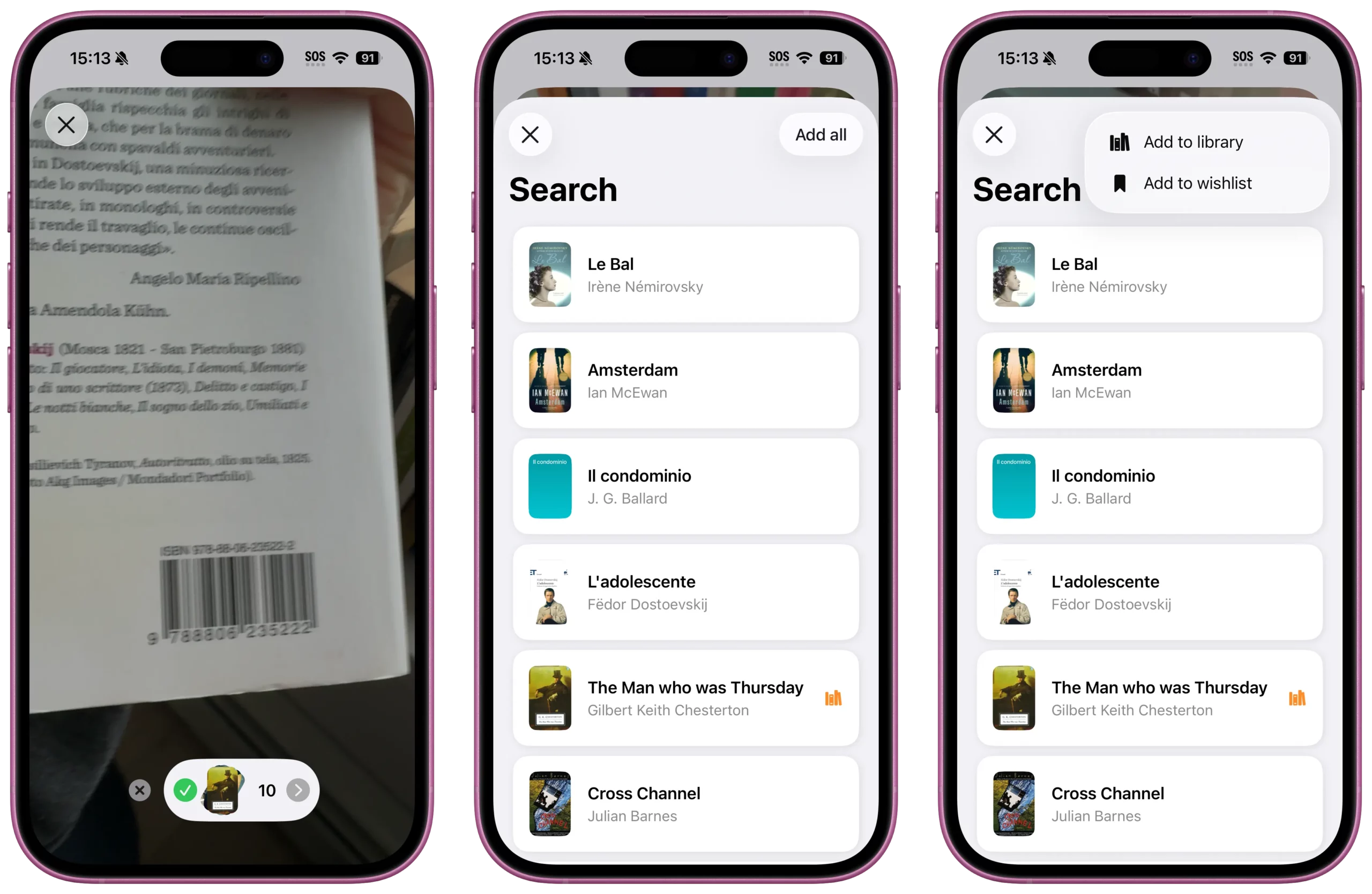
Suddenly, the “Mountain” is just a number. It’s manageable. You have moved the mental weight of remembering these books from your brain into the app.
2. Stop Using One Giant “TBR” List
The biggest mistake readers make is dumping every unread book into a single list called “To Be Read” (TBR). If you have 150 books on your TBR list, looking at it feels like looking at a massive to-do list from your boss. It causes decision paralysis.
Use Book Tracker’s Tags to break the pile into manageable categories:
- Up Next: Limit this to 5-10 books you actually want to read this month.
- Someday: This is for the classics or dense non-fiction you want to read eventually, but not right now.
- Reference: For cookbooks, poetry, or art books that you don’t “finish” but dip into.
- Mood: Tag books by vibe (e.g., “Cozy,” “Thrilling,” “Summer Read”).
Now, when you want to read, don’t look at the pile of 150. Filter by Up Next. You have just tricked your brain into thinking your workload is light.
3. The “Digital Shelf” Advantage
Physical books take up physical space. They stare at you. One of the best ways to cure Tsundoku guilt is to clear the physical clutter while keeping the digital potential.
Once your books are cataloged in Book Tracker, you can reorganize your physical space. You don’t need all your unread books on your nightstand aggressively waiting for you. You can put them on a high shelf, in a closet, or in boxes. Why? Because you can now “browse” your library on your phone. You can scroll through covers in the app while lying in bed, pick a book, and then go retrieve it physically.
You are separating the inventory management from the living space.
4. The “Anti-Haul” (It’s Okay to Let Go)
As you scan your books into Book Tracker, you might find a novel you bought five years ago because it was trendy, but you have zero interest in reading it today.
Delete it. Or better yet, create a tag calledTo Donate. Tsundoku becomes a burden when we hold onto books out of obligation. If a book doesn’t spark excitement when you scan it, it doesn’t deserve a spot in your digital library. Using the app to “audit” your collection helps you realize that you might not have 200 books to read—you might only have 120 that you actually like.
5. Reframing Tsundoku
Finally, remember that an unread library is not a sign of failure. It is a sign of curiosity. The writer Umberto Eco famously had a massive personal library of unread books, which he called an “Anti-Library.” He believed that unread books are more valuable than read ones because they represent what you have yet to learn.
By cataloging your books in Book Tracker, you are building your own Anti-Library. It is a research tool, a menu of future adventures, and a reflection of your interests.
Summary
Don’t let your unread books bully you.
- Scan them to remove the mystery.
- Tag them to prioritize.
- Browse them digitally to reduce visual clutter.
Turn your “Tsundoku” into a “To-Read Plan” today.
Level Up Your Reading Experience with Book Tracker!
Discover the joy of reading like never before. Organize your library, track your progress, and save your favorite quotes. Elevate your reading experience today!