There is something undeniably romantic about a physical reading journal. Walking into a stationery store, smelling the paper, picking out a pen that glides perfectly, and sitting down with a cup of tea to handwrite your thoughts on the book you just finished. It feels intentional. It feels “aesthetic.”
But then reality sets in. You finish a book on the bus, and you don’t have your journal with you. You want to know how many books you read last year, but you have to manually count the pages. You try to find a quote you wrote down two years ago, but you can’t remember which notebook it’s in.
The debate between Digital Apps (like Book Tracker) and Physical Journals is often presented as a battle. But which one actually helps you read more? Let’s break down the pros and cons so you can decide.
The Case for the Physical Journal
The Vibe: Let’s give credit where it’s due. Paper journals are beautiful. They allow for total creative freedom: you can doodle, use stickers, or write in messy cursive. The Focus: Writing by hand forces you to slow down. It’s a screen-free activity that can help with memory retention. If your goal is purely therapeutic (treating reading like a meditation) paper wins.
The Problem: Paper has limits.
- No Search Function: Looking for a specific review? Good luck flipping through five years of notebooks.
- It’s Heavy: You likely won’t carry your journal to the bookstore. This means you might buy a duplicate book because you forgot you already own it (and didn’t write it down yet).
- Data is Dead: A notebook can’t tell you your average pages per day or show you a graph of your most-read genres.
The Case for the Digital Journal (Book Tracker)
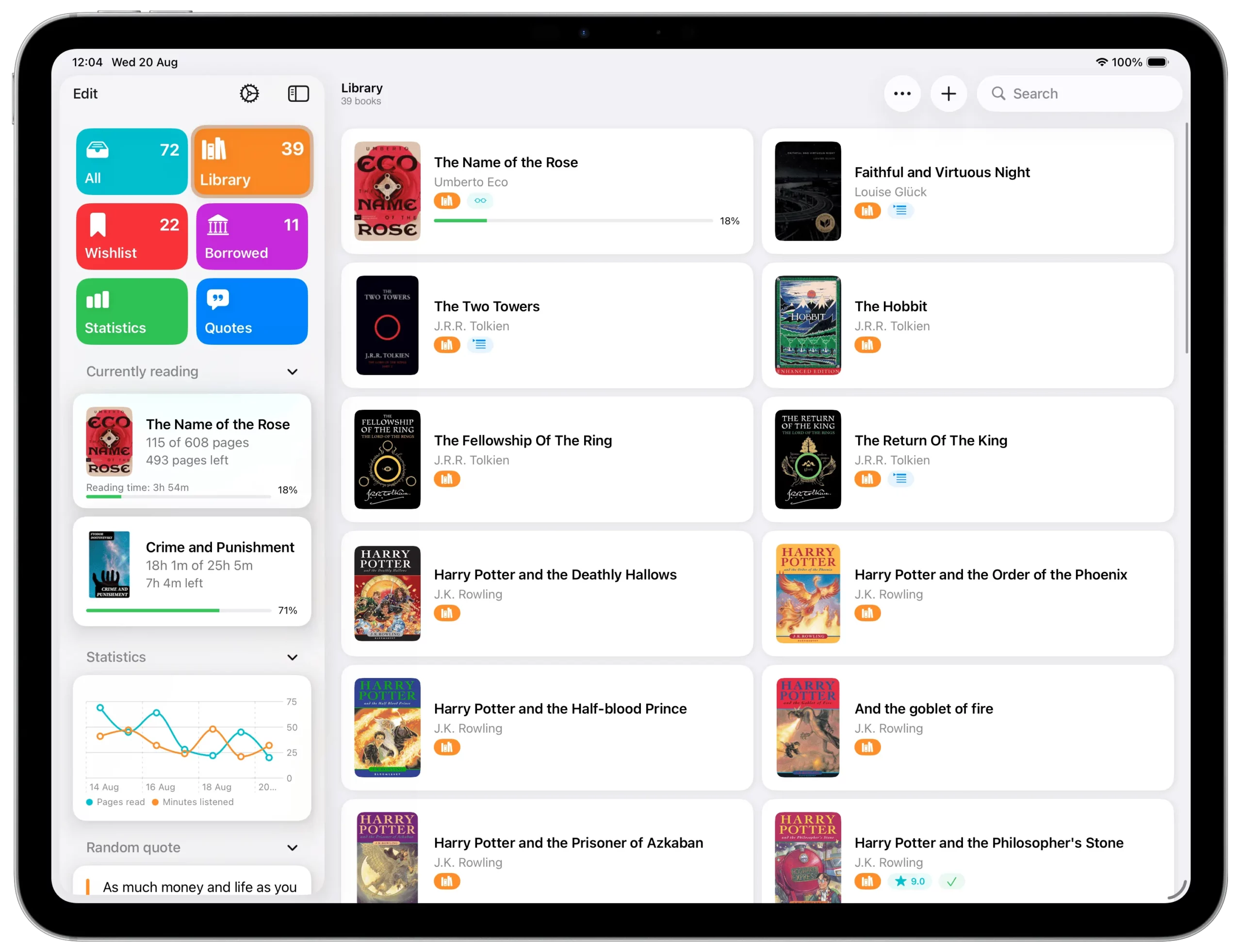
The Brain: Think of a digital tracker not just as a list, but as a database.
- Instant Entry: You finish a book, scan the barcode, and boom, it’s logged with the date, publisher, and page count.
- Always With You: Standing in a library? Your entire reading history is in your pocket. You can instantly check your “Wishlist” or “TBR”.
- Smart Stats: As mentioned in our previous guide, apps visualize your reading life. Seeing a progress bar fill up is a powerful dopamine hit that paper can’t replicate.
The “Edits” Factor: Changed your mind about a book? On an app, you can update a rating from 4 to 5 stars in a second. In a notebook, you’re stuck with your ink.
The Verdict: Why Not Both? (The Hybrid Method)
Here is the secret that power readers know: You don’t have to choose.
In fact, the most effective system is often a Hybrid Method. Use Book Tracker as your “Librarian” and a notebook as your “Diary.”
How to make it work:
- The “System of Record”: Use Book Tracker for everything. Log every book you buy, start, and finish. This ensures your stats are accurate and your inventory is searchable. This is your database.
- The “Deep Dive”: When a book really moves you and you want to write a 3-page essay about it, grab your paper journal.
- Link Them: In the “Notes” section of Book Tracker, simply write: “See physical journal Vol. 4 for full review.”
Summary
| Feature | Physical Journal | Digital App (Book Tracker) |
| Portability | Low (stays at home) | High (always in pocket) |
| Searchability | Impossible | Instant |
| Stats & Data | Manual calculation | Automatic |
| Vibe | Creative & Slow | Clean & Efficient |
| Backup | None (don’t lose it!) | iCloud / Cloud Backup |
Final Thoughts
If you want a place to paste scrapbook stickers, buy a notebook. But if you want to actually manage your library, track your habits, and never buy a duplicate book again, you need a digital tool.
Don’t let nostalgia make your reading life disorganized. Start your digital journal with Book Tracker today.
Level Up Your Reading Experience with Book Tracker!
Discover the joy of reading like never before. Organize your library, track your progress, and save your favorite quotes. Elevate your reading experience today!