
Look at your bookshelves. Really look at them. You see stories, memories, and knowledge. But if you put on an accountant’s hat, you see something else: an investment.
Whether you are a casual reader or a hardcore collector, you have likely spent hundreds, if not thousands of dollars (or Euros) on your passion. But do you know the exact number? If asked, could you say how much you spent on books in 2025?
Most readers avoid this question because they are afraid of the answer. But treating your library like a financial asset isn’t about guilt; it’s about awareness and protection.
Book Tracker isn’t just for tracking plots; it’s also a powerful inventory tool for your finances. Here is how to use the Purchase & Price features to unlock the hidden value of your collection.
1. Inputting the Data (The “Price Tag” Habit)
When you add a book to Book Tracker, it’s easy to just scan the cover and move on. But taking 3 extra seconds to fill in the Acquisition Details transforms your data.
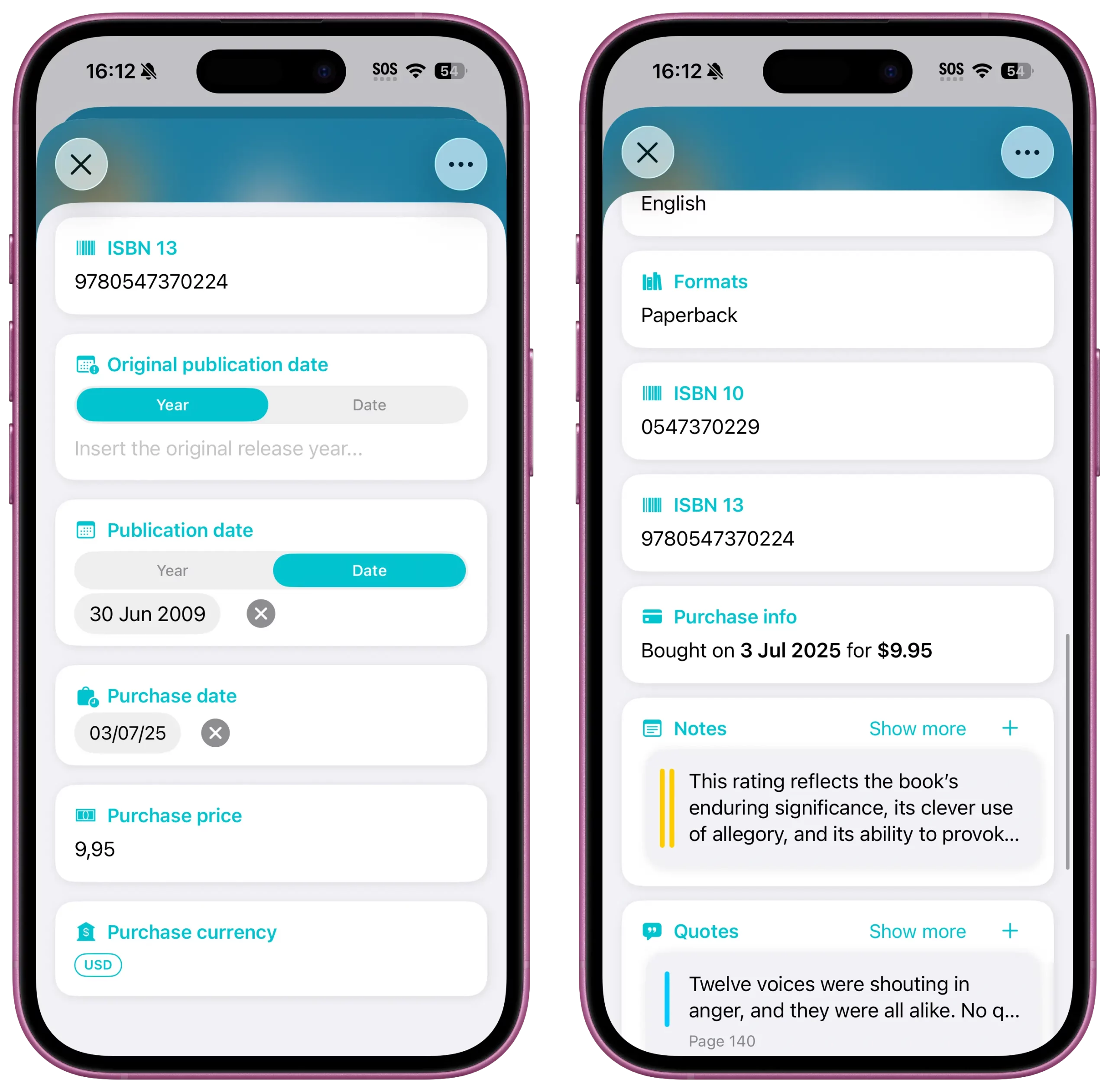
Whenever you buy a book, look for these two fields in the “Edit Book” screen:
- Purchase Date: When did you buy it?
- Price: How much did you pay?
2. The “Scary” Truth: Analyzing Your Yearly Spend
Once you start logging prices, the Statistics section of Book Tracker becomes incredibly powerful.
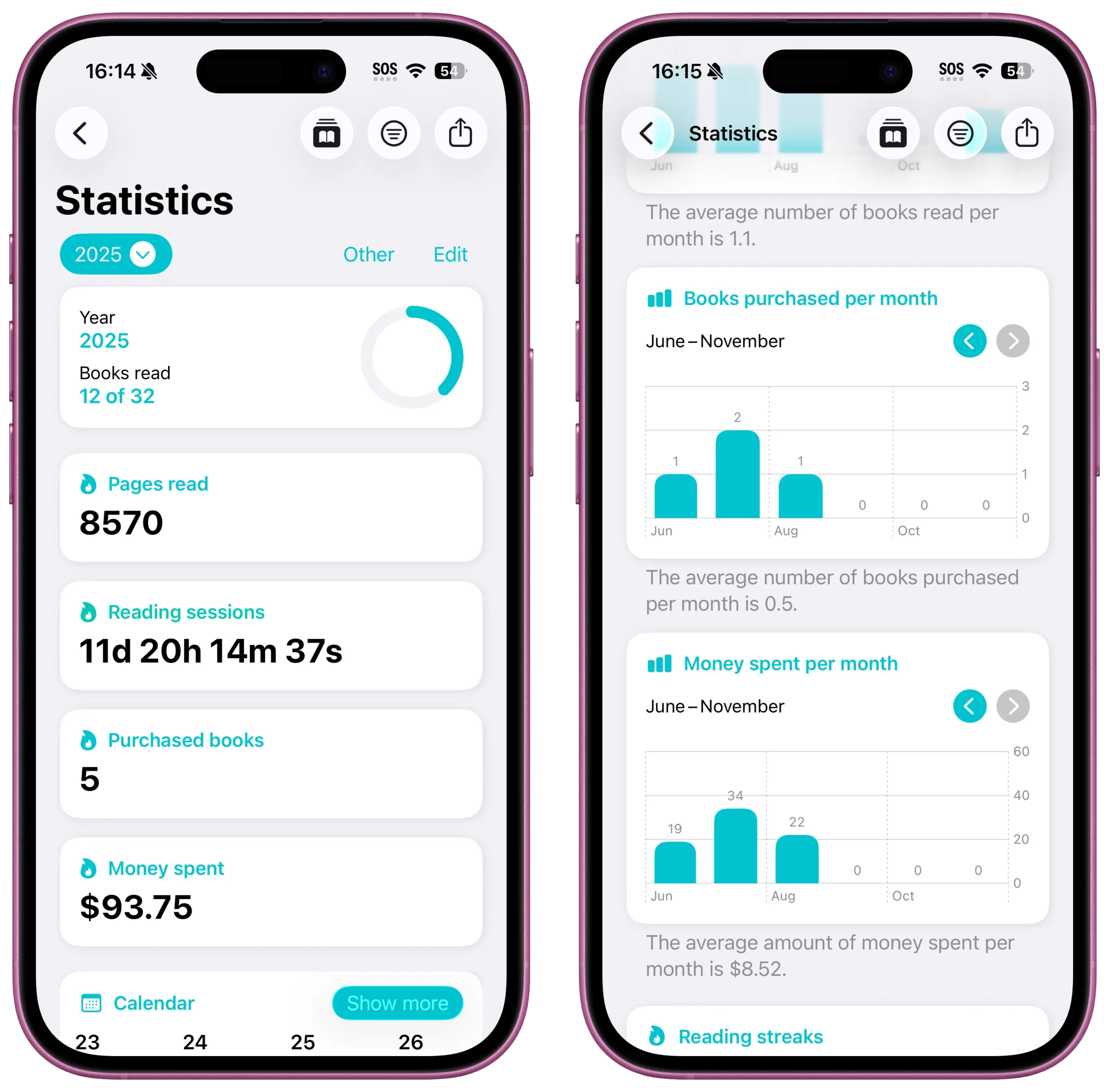
Navigate to Stats and select the current year (e.g., 2025). Scroll down to the Acquisitions block. Here, the app does the math for you. You will see:
- Books Purchased: The total count of new arrivals (distinct from books read).
- Total Spent: The sum of all those price tags.
Seeing this number can be a reality check. You might realize, “I spent $400 on books this year, but I only read $50 worth of them.” This insight is the first step to building better buying habits for 2026.
3. The Monthly Breakdown (Spotting Your Patterns)
Digging deeper, Book Tracker offers a Monthly Breakdown of your spending. This is where you spot your triggers.
- Is there a spike in November? Maybe that’s because of Black Friday sales.
- Is July high? Maybe you buy more thrillers for your summer vacation.
- Is January low? Maybe you were busy reading Christmas gifts (price: 0).
Understanding when you spend money helps you budget better. If you know you spend heavily in summer, you can save up for it.
4. Why This Data Matters (It’s Not Just About Budgeting)
Why bother tracking the value of your library? It’s not just to make you feel guilty about buying more books. It serves a very practical purpose: Insurance.
If—heaven forbid—your home suffers from a fire, flood, or theft, insurance companies require proof of loss. A photo of a bookshelf is often not enough to get fully reimbursed. By exporting your Book Tracker inventory (complete with purchase dates and prices), you have a professional, itemized list of your assets. You can prove that your collection is worth $5,000, not $500.
5. Tracking “Cost Per Read”
Finally, this data helps you calculate the most fun metric of all: Value for Money. If you bought a massive fantasy anthology for $30 but it kept you entertained for 40 hours, that’s less than $1 per hour of entertainment, much cheaper than a movie ticket!
Summary
Your library is a treasure trove, literally and figuratively. Don’t leave its value to guesswork. Start logging your Purchase Dates and Prices in Book Tracker today. You might be surprised by just how valuable your collection really is.
Level Up Your Reading Experience with Book Tracker!
Discover the joy of reading like never before. Organize your library, track your progress, and save your favorite quotes. Elevate your reading experience today!